
Support For Neurodivergent Clients
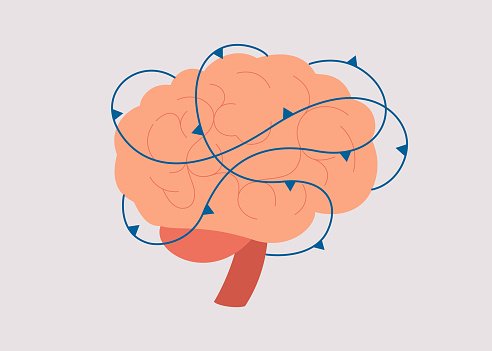
From individual psychotherapy to awareness bringing workshops.
My Offer

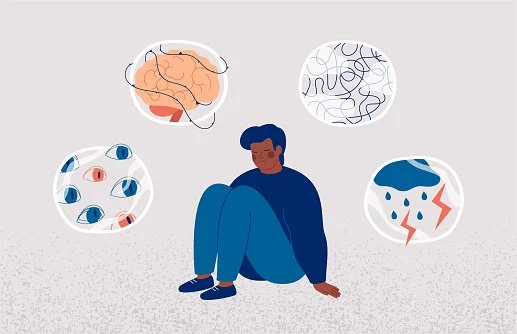
My Additional Specialist Training
Understanding and managing ADHD and Anxiety Disorder (Anxiety, ADHD, ASD and the Brain neuroscience)
The Nervous System Reset: A Polyvagal - Informed Training for Trauma, Anxiety, PTSD & Neurodiversity
The Polyvagal Theory: Manage Anxiety, Trauma and Autism
Treating Complex Post-Traumatic Stress Disorder - Body Mind Breakthrough
Understanding Autism
Understanding ADHD
Your Questions, Answered
-
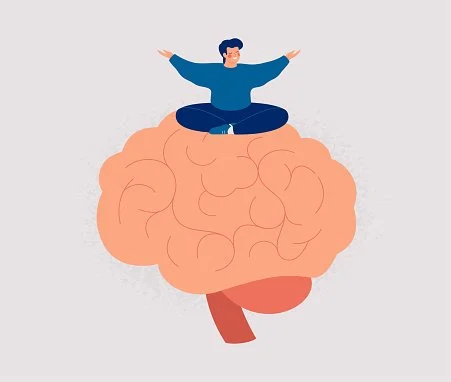
Neurodiversity is the simple, observable fact that human brains don't all work the same way.
Some brains are wired for deep, sustained focus. Others for rapid pattern-spotting. Some process sensory input intensely; others filter it automatically. Some think in linear steps; others in webs and leaps. None of these are errors. They're variations — like height, handedness, or eye color — but in how we perceive, think, feel, and navigate the world.
The term neurodivergent describes people whose wiring falls outside the statistical majority: ADHD, autism, dyslexia, dyspraxia, Tourette's, and more. Neurotypical describes the majority wiring. Neither is superior. Both are necessary.
The problem isn't the difference. The problem is that schools, workplaces, and healthcare were built for only one kind of brain. Neurodiversity-affirming work doesn't try to "fix" the person. It builds environments where different operating systems can actually run.
I don't treat neurodivergence as a disorder to manage. I treat it as a different operating system — one that comes with real challenges in a world not built for it, but also with real gifts that get lost when we only look at the deficits. My job is to help you understand your wiring, work with it instead of against it, and build a life that fits the brain you actually have.
-
A diagnosis tells you what. It doesn't tell you who.
Standard care treats the label: medication for attention, CBT for anxiety, coaching for executive function. Each piece addresses a symptom in isolation. But a neurodivergent person isn't a collection of symptoms — they're a nervous system, a life history, a set of strengths, a relationship to their own mind, and often years of being misunderstood.
An integrative approach means we look at the whole picture: biology, psychology, environment, identity, and the spiritual/meaning-making layer that most models leave out. We ask what's driving the dysregulation — not just how to suppress it. We build capacity from the inside out, not just manage from the outside in.
The result isn't just "better functioning." It's a person who understands their own operating system, trusts their signals, and stops spending energy pretending to be someone else.
Why integrative approach?
Medication can regulate chemistry — but it doesn't teach self-trust.
Therapy can process history — but it often misses the neurobiological reality.
Coaching builds skills — but without nervous system awareness, it becomes another mask.
Spiritual/meaning work anchors identity — but without practical tools, it stays abstract.
Together, they create something none of them can alone: a life that actually fits the person living it.
I've seen what happens when we treat the pieces but miss the person. A client gets the right medication but still believes they're broken. Another masters every productivity hack but burns out because no one asked what their nervous system actually needs. A third does years of talk therapy but never connects their shame to the fact that their brain was never the problem — the environment was.
Integrative isn't a buzzword. It's the difference between helping someone cope and helping them come home to themselves.
-
Neurodivergent employees aren't a niche population — they're 15–20% of your workforce. When the environment matches how their brains actually work, you get pattern recognition others miss, deep-focus output that moves projects forward, and creative problem-solving that doesn't come from linear thinking. The cost of ignoring this isn't just inclusion metrics. It's turnover, burnout, quiet quitting, and the innovation you never saw because the person who would've delivered it left.
Most workplaces are built for one kind of brain. Everyone else spends energy masking, translating, and recovering from environments that drain them. Neuro-awareness isn't a perk — it's removing the friction that keeps your best people from showing up fully. When a manager understands sensory load, communication differences, and executive function, they stop misreading capacity as attitude. Trust goes up. Performance follows.